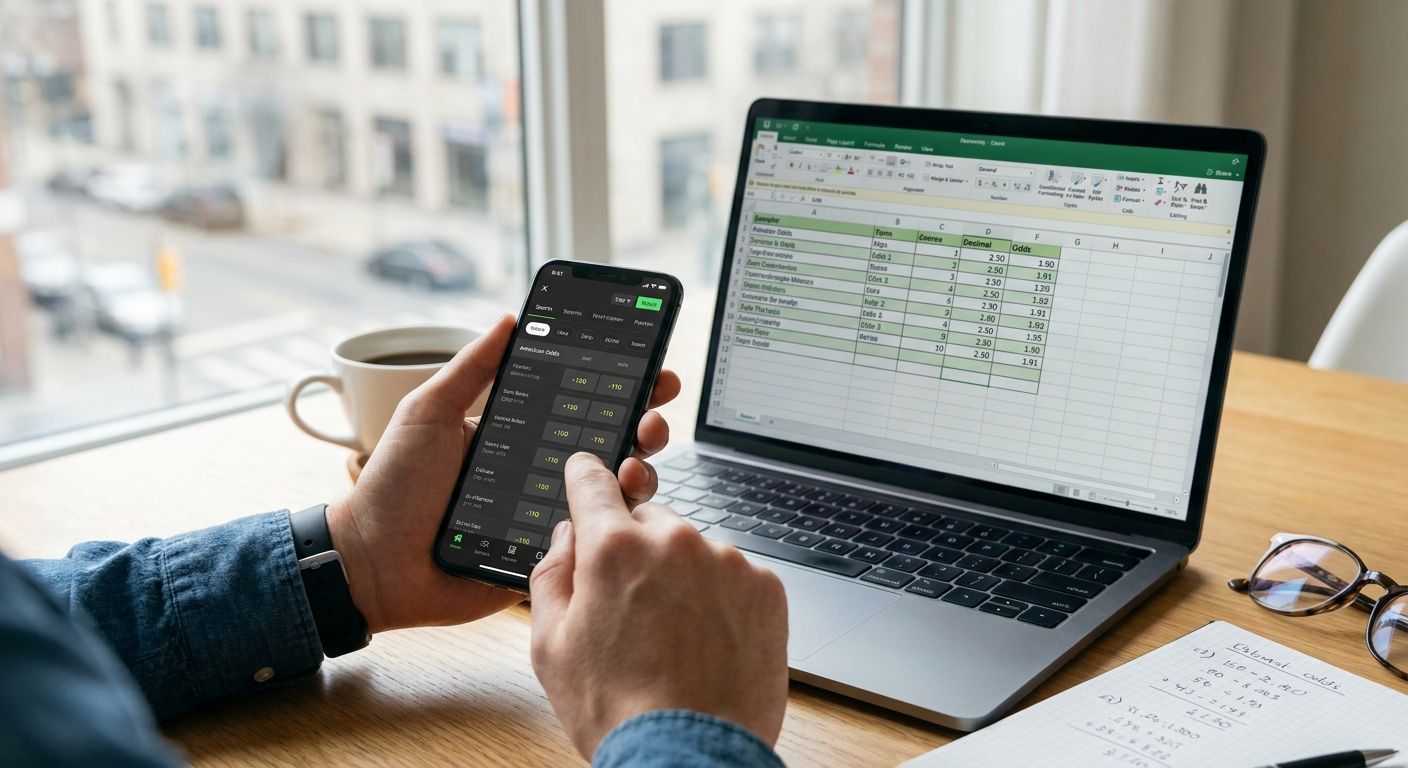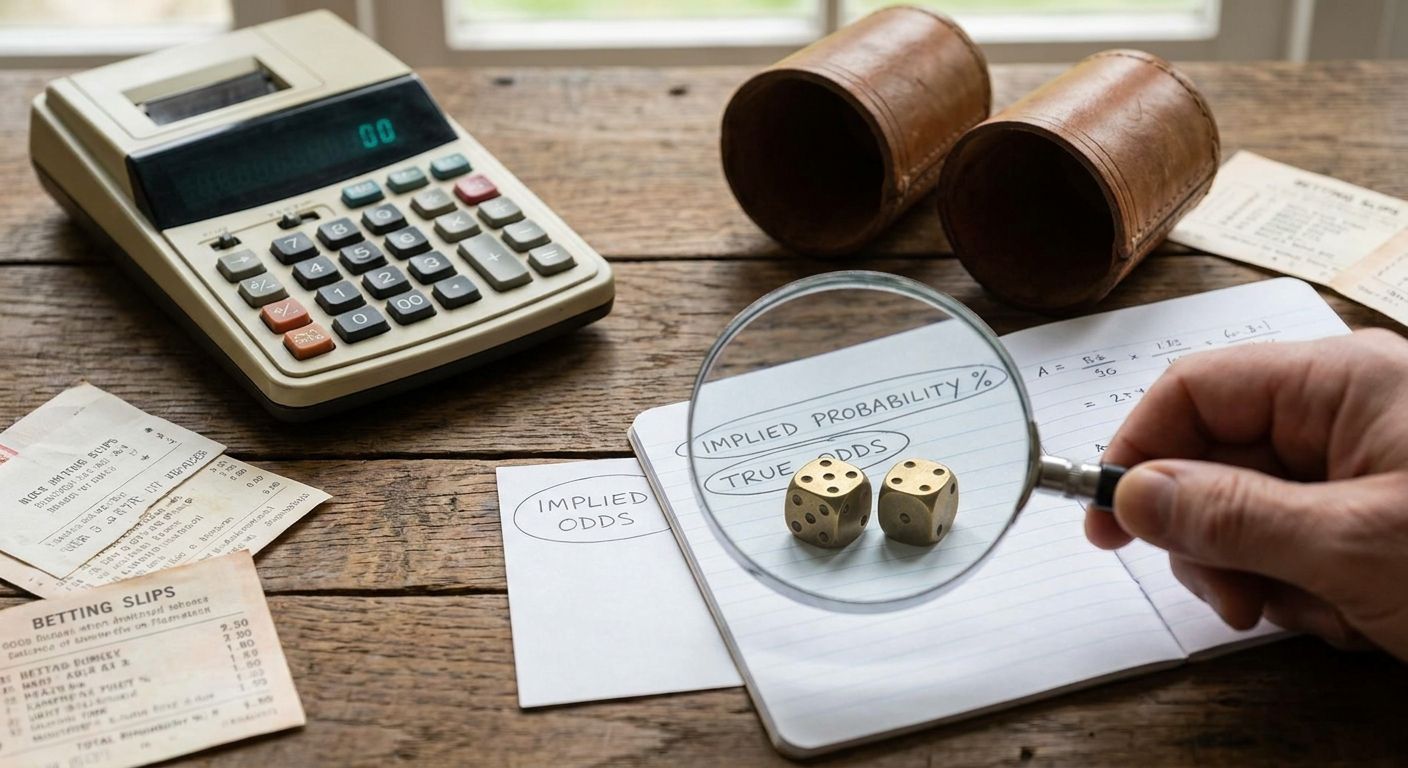
Implied probability and true odds sound like the same thing, but they measure different numbers - one includes the sportsbook's cut, the other doesn't.
- Implied probability and true odds are not the same: implied probability bakes in the sportsbook's vig.
- A standard -110/-110 line implies 104.76% total probability - a 4.76% overround, not real odds.
- True odds only exist after you strip the vig out, typically with a no-vig calculator.
- Player props and futures widen the gap between implied probability and true odds further than standard game lines do in 2026.
No, implied probability is not the same as true odds. Implied probability is the probability a sportsbook's posted price implies before you remove the operator's margin, while true odds are the actual probability of an outcome once that margin - the vig - is stripped out. On a standard -110/-110 point spread, each side implies 52.38% probability, but the two sides add up to 104.76%, a 4.76% overround that has nothing to do with either team's real chance of winning.
That extra 4.76% is the vig, and it sits inside every posted line a sportsbook puts up in 2026. Bettors who want an outcome's true odds have to remove it first, then compare what's left against their own probability estimate or against a de-vigged consensus, using something like the tools in VigWatch's no-vig calculator comparison.
Why this matters
Confusing implied probability with true odds is how bettors talk themselves into bad prices. A -110 line looks like a coin flip at 52.38%, but that number already includes the book's profit margin - the actual coin-flip probability is closer to 50%. Betting on implied probability alone means pricing in the vig as if it were real risk, which is the opposite of what a +EV bettor wants to do.
Is implied probability the same as true odds?
The two numbers diverge every time a sportsbook posts a price, because implied probability comes straight from the odds while true odds require removing the vig first. Here's the side-by-side:
| Implied probability | True odds | |
|---|---|---|
| What it measures | Probability baked into the posted price | Actual probability after vig is removed |
| Includes the vig? | Yes | No |
| -110/-110 example | 52.38% per side, 104.76% total | Roughly 50% per side, 100% total |
| Used for | Reading a single book's line | Comparing across books, finding +EV bets |
| Where you find it | Any sportsbook's odds board | A no-vig calculator or de-vigged consensus |
Every two-way market that isn't a genuine 50/50 proposition carries some version of this gap. The size of the gap is the tell: a tight market means the book is pricing close to efficient, a wide one means there's more vig to work around.
The short verdict: implied probability tells you what the book is charging, true odds tell you what the bet is actually worth.
-110 odds: 52.38% implied probability
American odds of -110 convert with 110 / (110 + 100), which comes out to 52.38%. That's the standard price on most point spreads and totals, and it's the one number every bettor should memorize because it's the most common line on the board.
Remove the vig and each side lands back near 50%. The 2.38 percentage points of difference per side is the book's fee, not information about the game.
-150 odds: 60% implied probability
Odds of -150 convert to 150 / (150 + 100), or 60% implied probability. A favorite priced at -150 has to win 6 out of 10 times just to break even against that price - and part of that 60% is margin, not real win probability.
+150 odds: 40% implied probability
Underdog odds of +150 convert to 100 / (150 + 100), or 40% implied probability. If your own model has that team winning more often than 40% of the time, the price carries positive expected value against your number, which is the premise behind every scanner in the +EV betting tools category.
Why implied probability and true odds vary
- Vig size - standard game lines run tighter than player props and futures, so the gap between implied and true odds is smallest on spreads and totals.
- Market liquidity - heavily bet markets like NFL sides get sharper pricing than obscure props with thin action.
- Book risk management - a sportsbook shades a line to balance money on both sides, which moves implied probability without the real probability changing at all.
- Number of outcomes - three-way soccer markets and multi-team futures stack more overround than a simple two-way bet.
- Timing - implied probability shifts with injury news, weather, and sharp money throughout the day.
- Which book you're reading - two sportsbooks can post different prices on the same game at the same second, so their implied probabilities disagree.
Related questions
What is a no-vig line?
A no-vig line is a set of probabilities where the vig has been mathematically removed so all outcomes sum to 100% instead of 104.76%. It's the closest a bettor gets to true odds without access to the sportsbook's internal risk model.
How do you convert implied probability to true odds?
Divide each outcome's implied probability by the total implied probability across the market. On a -110/-110 line that means dividing 52.38% by 104.76%, which returns both sides to roughly 50%.
Does implied probability tell you if a bet has positive expected value?
Implied probability alone does not tell you whether a bet has positive expected value - you have to compare it against your own estimate or a de-vigged consensus. A -150 favorite implying 60% is only +EV if the real probability sits above that 60% figure.
Line shopping across odds comparison sites is the fastest way to see how far implied probability drifts between books on the same game. Once you've converted that into a real edge estimate, stake sizing is the next step, which is what Kelly criterion calculators handle.
Compare odds before you bet
See implied probability across sportsbooks side by side in one place.
Where VigWatch fits
VigWatch is built for bettors who want to see the same market priced across multiple sportsbooks at once rather than trusting a single book's implied probability. It compares odds across books, tracks line movement, and scans for arbitrage and +EV opportunities across MLB, NFL, NBA, and NHL, plus bet logging so you can check your own results against the prices you took.
The honest limitation: no tool hands you true odds. A comparison or de-vigging tool gets you a cleaner estimate by removing the overround, but the actual probability of an event is unknowable - you're always working with a better approximation, not a certainty.
FAQ
Is implied probability the same as true odds?
No, implied probability includes the sportsbook's vig while true odds do not. A -110/-110 line implies 104.76% total probability, but true odds across a two-way market sum to 100%.
How much vig is in a standard -110 line?
A standard -110/-110 line carries a 4.76% overround. That comes from adding each side's 52.38% implied probability and subtracting 100%.
What is implied probability in sports betting?
Implied probability is the win chance a sportsbook's posted odds suggest, calculated directly from American, decimal, or fractional odds. It always includes the book's margin, so it reads higher than the outcome's actual chance.
How do I remove the vig from a betting line?
Divide each outcome's implied probability by the total implied probability across the market. On a -110/-110 line, dividing 52.38% by 104.76% returns each side to roughly 50%.
Why do sportsbooks build in a vig?
Sportsbooks add a vig so they hold a margin regardless of which side wins. On standard game lines that margin is commonly around the 4.76% seen in a -110/-110 market.
Do player props have more vig than game lines?
Player props and futures generally carry more vig than standard sides and totals because they take less volume and are harder to price. That widens the gap between implied probability and true odds.
Can implied probability change without the true odds changing?
Yes. A sportsbook moves its line to balance action or manage risk, which shifts implied probability even when nothing about the event has changed.
What is the best way to find true odds in 2026?
Compare the same market across several sportsbooks and de-vig the consensus rather than trusting one book's number. Odds comparison and no-vig tools do this calculation automatically.
One last thing
The -110/-110 example is the best case, not the worst. Standard two-way game lines carry some of the tightest pricing on the board; player props, futures, and parlays routinely run well past that 4.76% overround, so the distance between implied probability and true odds gets wider the further you move from a plain spread or total in 2026.