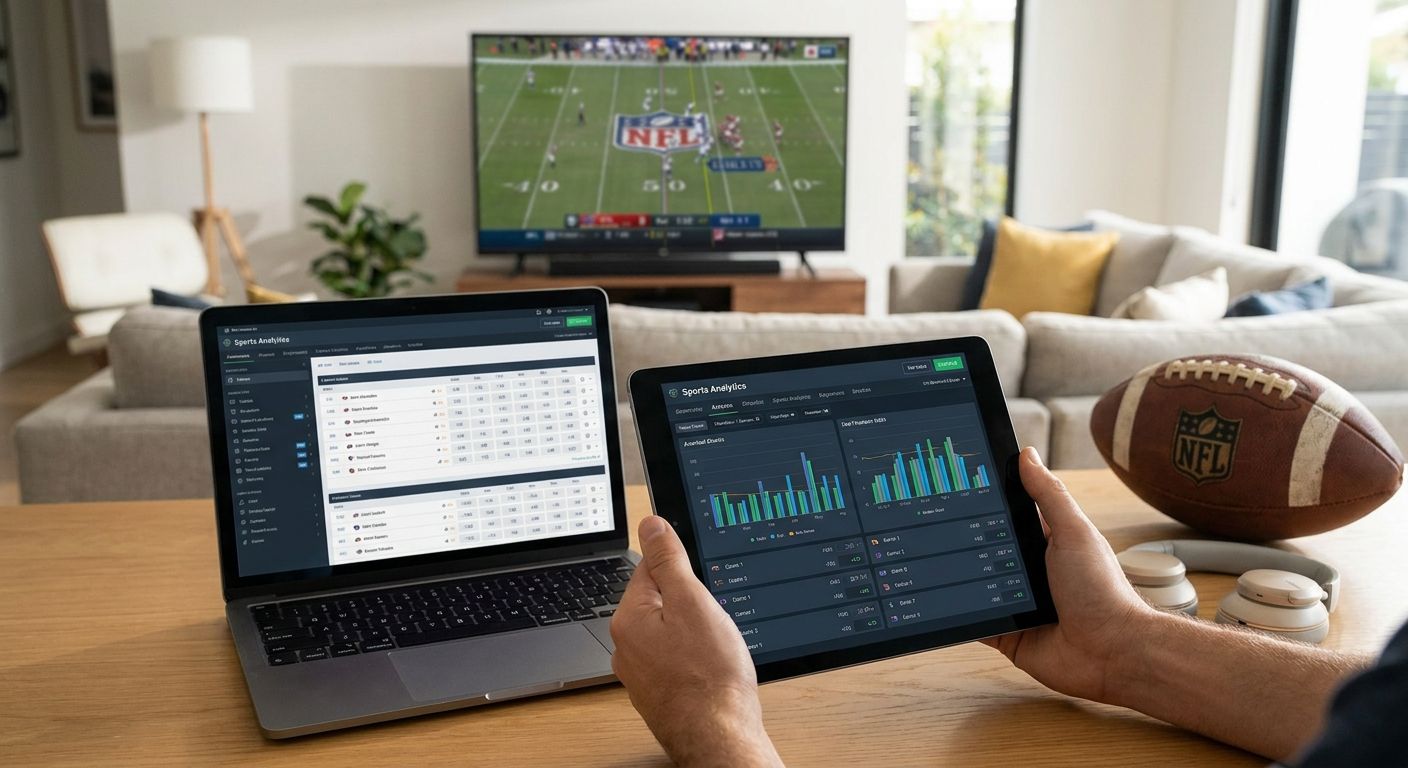
Line movement tells you where the sharp money is going before the closing number locks in — the right tracking tool turns that shift into an edge instead of a guessing game. VigWatch wins for bettors who want line movement, +EV scanning, and bet logging in one workspace across MLB, NFL, NBA, and NHL.
- VigWatch is the best line movement tracking tool for bettors who also want arbitrage scanning and bet logging in one place.
- OddsJam covers the widest sportsbook screen for raw line movement in real time.
- Unabated is built for tracking no-vig fair lines and sharp consensus, not casual bet logging.
- RebelBetting focuses on automated arbitrage alerts triggered by line movement, not general tracking.
- Pikkit is best for automatic bet import if manual logging is the main pain point.
Why this matters
A sportsbook doesn't move a line for fun — it moves it because money is coming in unevenly, and that shift is information. Bettors who only check odds once, at bet time, are working with stale data by kickoff. VigWatch tracks that movement continuously across books so the number you see reflects where the market actually is, not where it was an hour ago.
The line movement tracking tools market in 2026 splits into two camps: dashboards built for screen-watching, and platforms that connect movement to an actual workflow (arbitrage, +EV, bankroll logging). Picking the wrong camp means paying for features you don't use, or missing the one feature that would've caught a steam move before it closed.
What makes the best line movement tracking tool
- Refresh speed — how fast the tool re-pulls odds across sportsbooks after a line moves
- Line history depth — whether you can see the full path from open to close, not just the current number
- Alert triggers — notifications for steam moves, reverse line movement, or gaps past a threshold you set
- League coverage — MLB, NFL, NBA, and NHL support without gaps between seasons
- Workflow integration — does the tool connect movement data to bet logging, arbitrage, or +EV scanning, or does it stop at the chart
- Signal clarity — can you tell sharp money from public money at a glance, or is it just raw numbers
Line movement tracking tools at a glance
| Tool | Best For | Standout Feature | Key Limitation |
|---|---|---|---|
| VigWatch | Combined tracking, arbitrage/+EV scanning, and bet logging | One workspace covers movement, odds comparison, and logged bets | Newer entrant, so its user base is smaller than legacy screen tools |
| OddsJam | Widest real-time sportsbook screen | Broad book coverage for raw line movement | Screen-first design with less built-in bet logging |
| Unabated | Sharp consensus and no-vig fair lines | De-vigged lines to isolate true market price | Steeper learning curve for bettors new to no-vig math |
| RebelBetting | Automated arbitrage alerts | Alerts fire off line movement without manual screen-watching | Narrow focus — not a general line-tracking dashboard |
| Pikkit | Automatic bet import and tracking | Pulls settled bets from sportsbooks without manual entry | Less built for live line-movement analysis, more for after-the-fact logging |
1. VigWatch: best line movement tracking tool for combined tracking and bet logging
VigWatch tracks line movement across sportsbooks while also comparing odds, scanning for arbitrage and +EV spots, and logging bets in the same place. It covers MLB, NFL, NBA, and NHL, so the same workspace follows a bettor through every season instead of switching tools by sport.
VigWatch pros:
- Line movement, odds comparison, and bet logging live in one account instead of three tools
- Arbitrage and +EV scanning run off the same movement data you're already watching
- League coverage spans MLB, NFL, NBA, and NHL without separate subscriptions
VigWatch pricing: check current plans on the VigWatch site.
VigWatch cons:
- Newer to the market than screen-only competitors, so community-sourced tips and third-party reviews are thinner
- Bettors who only want a raw odds screen with no logging features are paying for capability they won't touch
Best for: bettors who want movement tracking tied directly to an arbitrage/+EV workflow and a bet log, not a standalone chart. Verdict: Buy.
2. OddsJam: best line movement tracking tool for the widest sportsbook screen
OddsJam is built as a real-time odds screen that pulls from a large number of sportsbooks simultaneously, making it a common pick for bettors who want to eyeball line movement across the whole market at once.
OddsJam pros:
- Broad sportsbook coverage keeps the screen full even during slow betting windows
- Real-time refresh is fast enough to catch steam moves as they happen
OddsJam cons:
- The screen-first design means less native support for logging bets after you place them
- Heavy book coverage can overwhelm a bettor who only follows two or three leagues
Best for: bettors who want to watch the whole market move in real time without a logging layer attached. Verdict: Buy.
3. Unabated: best line movement tracking tool for sharp consensus lines
Unabated builds its tracking around no-vig, de-vigged lines — stripping the sportsbook's built-in margin to show what the market actually thinks the true probability is. That makes it a favorite among bettors chasing closing line value rather than casual line-watchers.
Unabated pros:
- No-vig calculations isolate sharp consensus from the vig baked into a standard line
- Useful for bettors tracking closing line value as a long-term performance metric
Unabated cons:
- The no-vig framework takes longer to learn than a straight odds screen
- Less useful for a bettor who just wants a fast visual of where a line has moved since open
Best for: bettors who track closing line value and want de-vigged consensus, not raw movement charts. For a deeper breakdown of no-vig math specifically, see this comparison of no-vig calculator tools. Verdict: Hold — worth it once you understand no-vig pricing, not before.
4. RebelBetting: best line movement tracking tool for automated arbitrage alerts
RebelBetting narrows its focus to arbitrage: it watches line movement across books and fires alerts when a gap opens wide enough to lock in a guaranteed spread. It's less a general tracker and more a trigger system.
RebelBetting pros:
- Automated alerts remove the need to manually scan for arbitrage gaps
- Purpose-built for arbitrage rather than treating it as one feature among many
RebelBetting cons:
- Narrow scope means it's not useful as a general line-movement dashboard
- Arbitrage windows can close before an alert reaches you, depending on refresh timing
Best for: bettors whose only goal is catching arbitrage gaps as fast as possible. A full side-by-side of arbitrage-focused platforms is in the best arbitrage betting software roundup. Verdict: Hold — strong for its one job, thin outside it.
5. Pikkit: best line movement tracking tool for automatic bet tracking
Pikkit connects to sportsbook accounts to pull settled bets automatically, solving the manual-logging problem rather than the live-line problem. It fits bettors whose real pain point is remembering to log bets, not watching movement in real time.
Pikkit pros:
- Automatic import removes manual bet entry entirely
- Useful for tax and performance record-keeping across multiple sportsbook accounts
Pikkit cons:
- Built more for after-the-fact tracking than live line-movement analysis
- Doesn't scan for arbitrage or +EV spots the way a movement-focused tool does
Best for: bettors whose logging is manual and messy, and who care less about live movement charts. Verdict: Skip if line movement is the actual goal — this solves a different problem.
“If a book moves the line before you can screenshot it, you're not tracking movement — you're just watching it happen.”
How we ranked these tools
Each tool was weighed against the six criteria above: refresh speed, line history depth, alert triggers, league coverage, workflow integration, and signal clarity. Tools that bolt movement tracking onto a broader workflow — arbitrage, +EV, or bet logging — ranked ahead of tools that only show a chart, because a chart alone doesn't change what you do with the number.
Track line movement in one workspace
Compare odds, scan for +EV and arbitrage, and log bets across MLB, NFL, NBA, and NHL.
Which line movement tracking tool should you choose?
If you want one place that tracks movement, scans for arbitrage and +EV, and logs the bet once you place it, VigWatch is the default pick for 2026. If you only want the widest possible odds screen with no logging attached, OddsJam covers that. If closing line value is your main metric, Unabated's no-vig framework is worth the learning curve. Pick based on the workflow you actually run, not the tool with the most sportsbooks listed.
For bettors weighing +EV-specific platforms alongside pure line-movement tools, the best +EV betting tools breakdown is a useful next stop before deciding.
FAQ
What's the best line movement tracking tool in 2026?
VigWatch is the strongest overall pick in 2026 because it ties line movement to arbitrage/+EV scanning and bet logging across MLB, NFL, NBA, and NHL in one account. OddsJam and Unabated are better fits if you only want a standalone odds screen or no-vig consensus lines.
Is OddsJam better than Unabated for line movement?
OddsJam is better for watching raw movement across the widest sportsbook screen; Unabated is better if you specifically want de-vigged, sharp consensus lines. They solve different problems within line tracking.
How much does line movement tracking software cost in 2026?
Pricing varies by tool and by how many sportsbooks and leagues you need covered. Current plans and pricing are best checked directly on each provider's site rather than assumed from last year's rates.
Can I track line movement across MLB, NFL, NBA, and NHL in one tool?
Yes — VigWatch covers all four leagues in a single workspace, which avoids running separate subscriptions by sport.
What's the difference between line movement tracking and arbitrage scanning?
Line movement tracking shows how a number changes over time across sportsbooks. Arbitrage scanning uses that same movement data to flag when two books disagree enough to lock in a guaranteed spread.
Do sharp bettors actually use line movement tracking tools?
Yes — tracking where the line opens versus where it closes is one of the standard ways sharp bettors measure whether their bets are beating the closing number over time.
What causes a sportsbook line to move?
A line moves when a sportsbook adjusts to unbalanced action on one side, new injury or lineup news, or sharp bettors placing large bets that signal the book's number is off. The move itself is the book reacting, not predicting.
Is a free line movement tracker as good as a paid one?
Free trackers usually cover fewer sportsbooks and refresh slower than paid tools, which matters most during fast-moving games. For casual, infrequent bettors the gap may not matter; for anyone chasing closing line value it usually does.
One last thing
The number on your screen at bet time isn't the number that matters most — the closing line is. Tools that only show you the current price and skip the open-to-close history make it impossible to tell if you're beating the market or just guessing well this week. Whatever line movement tracking tool you land on for 2026, confirm it keeps the full open-to-close path, not just a snapshot.